Teacher Renewal and Well-Being
-
Register
- Member - Free!
The Curated Collection brings together resources, practices, and perspectives that highlight the intersections of teacher renewal, well-being, and creative pedagogy. At its core, the collection emphasizes the importance of sustaining educators through reflective, contemplative, and arts-based approaches that nurture both professional growth and personal vitality. The collection offers various ways to explore how mindfulness, creativity, and self-care can be integrated into a teacher's personal and professional life, drawing from scholarship, classroom experiences, and personal practices. Each resource is selected to demonstrate practical strategies and research-based insights, encouraging educators to engage in renewal not as an isolated act but as an ongoing cycle of reflection, balance, and inspiration. By weaving together theory and practice, the Curated Collection aims to support teachers in fostering resilience, deepening their pedagogical presence, and ultimately enhancing their well-being and that of their students.
-
Contains 3 Component(s), Includes Credits
[May 13, 2026 | 7pm ET] Art classrooms offer a powerful space for students to slow down, reconnect with themselves, and engage more deeply in the creative process. This webinar introduces practical, time-efficient strategies that blend mindfulness, intuitive artmaking, and SEL-informed practices to help middle and high school students reduce stress, build emotional awareness, and express themselves with greater confidence.
Mindful Creativity in the Art Room: Simple Practices to Support Well-Being and Authentic Expression
Wednesday, May 13, 2026
FREE for NAEA members; $49 for nonmembersArt classrooms offer a powerful space for students to slow down, reconnect with themselves, and engage more deeply in the creative process. This webinar introduces practical, time-efficient strategies that blend mindfulness, intuitive artmaking, and SEL-informed practices to help middle and high school students reduce stress, build emotional awareness, and express themselves with greater confidence.
Teaching art and mindfulness together creates the mental space students need for creative thinking to flourish. Mindful routines help students settle their minds, ease anxiety, and access their imagination more easily, while process-focused art prompts encourage authentic expression without the pressure of perfection. These small shifts can transform the studio environment—improving focus, supporting self-regulation, and strengthening students’ ability to understand and communicate their emotions through art.
Explore ready-to-use ideas that fit naturally into existing lessons and daily classroom flow through this webinar. Learn how simple mindful moments and sensory-based check-ins can enrich studio routines, and how intuitive mark-making prompts—such as expressive drawing, guided visualization, or nonrepresentational response exercises—can help students bypass self-judgment and tap into their creative impulses. Discover the connection between present-moment awareness, creative confidence, and emotional well-being, offering concrete strategies that encourage students to feel more grounded and more connected to their own artistic voice.
What You’ll Learn:
- How to integrate quick 2- to 5-minute mindful routines—including breath work, sensory check-ins, and “slow looking”—to help students transition smoothly into artmaking.
- Intuitive art prompts that emphasize process over product, allowing students to explore, experiment, and express themselves without fear of making mistakes.
- Strategies for supporting emotional regulation and SEL through arts-based practices that help students understand, communicate, and manage their feelings.
- Approaches for fostering a calmer, more focused studio culture, where students feel safe to take creative risks and engage more deeply with materials and ideas.Raine Valentine
CAN Teacher Leader, Caucus on the Spiritual in Art Education Past Chair;Art Educator, Ridgely Middle School, Baltimore County, MD; Adjunct Professor, Notre Dame of MD
Raine Valentine is an award-winning art educator, intuitive painter, and former Chair of the Caucus on the Spiritual in Art Education. A leader in the NAEA Connected Arts Network, she is committed to uplifting mindful, culturally grounded, and student-centered creative practices. As the National Middle Level Art Educator of the Year, Raine brings over 15 years of experience integrating Teaching for Artistic Behavior (TAB), SEL, and Indigenous teachings into transformative art experiences. Her work empowers young artists to connect with their inner voice, regulate emotions, and embrace intuitive expression, while helping educators implement meaningful, time-efficient strategies that support holistic well-being and creativity.
Jane Dalton
Professor of Art Education, University of North Carolina Charlotte
Jane Dalton’s work integrates studio art and teacher education, emphasizing transformative learning through contemplative pedagogy, mindfulness, and the expressive arts. Grounded in learning science and neuroscience, her research shows how meditation can reshape brain function, behavior, and focus. She examines how contemplative art practices support emotional balance, self-awareness, and personal growth. Her recent book, The Mindful Studio (2023), adds to her three coedited volumes on contemplative practice and pedagogy in education. Dalton has authored multiple peer-reviewed chapters and articles, presented widely at conferences, and maintains an active studio practice alongside her academic scholarship.
Upon completion of this NAEA webinar, you may earn 1 hour of professional development credit as designated by NAEA. Once the webinar is completed, you may view/print a Certification of Participation under the "Contents" tab. You may also print a transcript of all webinars attended under the "Dashboard" link in the right sidebar section of the page.
Clock hours provided upon completion of any NAEA professional learning program are granted for participation in an organized professional learning experience under responsible sponsorship, capable direction and qualified instruction, and can be used toward continuing education credit in most states. It is the responsibility of the participant to verify acceptance by professional governing authorities in their area.
-
Contains 2 Component(s), Includes Credits
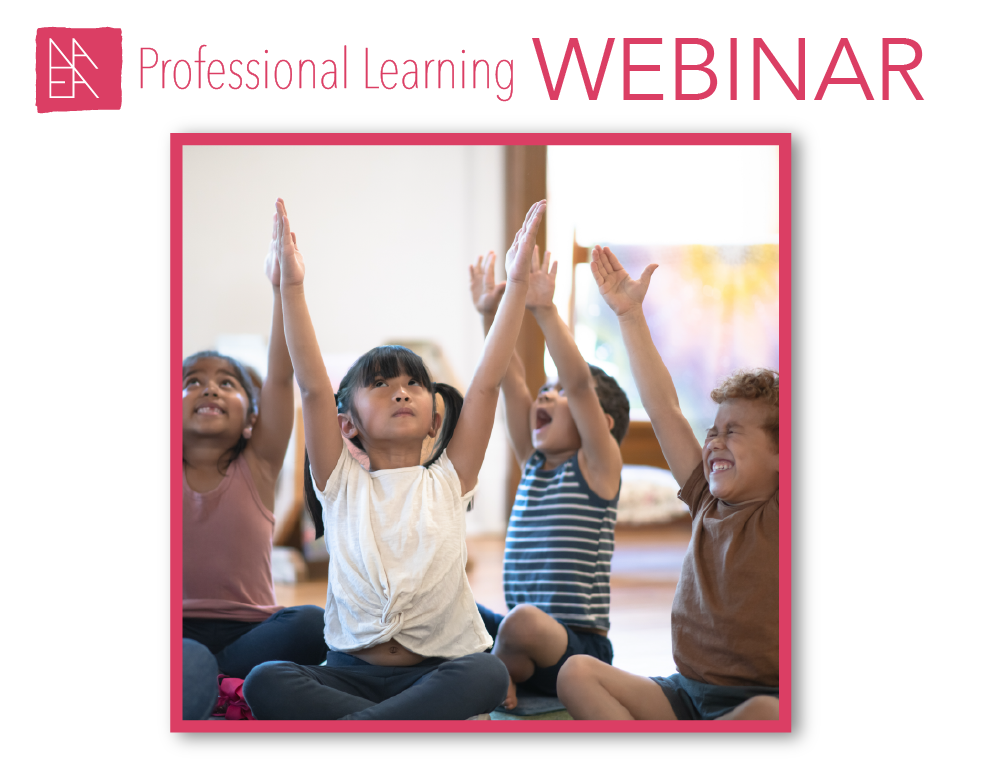
[January 13, 2021] Learn about mindfulness—what it is, why it works, and how to incorporate easy exercises into the school day. Gain accessible information into the science behind mindfulness as well as how it can help with self-regulation for our students and, most importantly, ourselves.
Mindfulness Exercises for the School Day: Prioritizing Self-Care
Wednesday, January 13, 2021 | 7-8pm ET
FREE for NAEA Members; $49 for non-membersLearn about mindfulness—what it is, why it works, and how to incorporate easy exercises into the school day. Gain accessible information into the science behind mindfulness as well as how it can help with self-regulation for our students and, most importantly, ourselves.
Kara Foster-Lee
Kara Foster-Lee, MAT; Program Coordinator, USC Upstate Child Protection Training Center
Kara Foster-Lee is a veteran early childhood educator who currently serves as the program coordinator for the Child Protection Training Center at USC Upstate in Spartanburg, South Carolina. Foster-Lee has incorporated mindfulness into her classroom for several years and completed the certification program offered through Mindful Schools. She has facilitated a number of trainings across the state of South Carolina related to trauma-informed and mindfulness practices, as well as the importance of self-care and how to create a positive classroom environment. Foster-Lee enjoys reading, yoga, and spending time with her dog Weezy. She looks forward to the day that heart smarts are as treasured as brain smarts.
Upon completion of this NAEA webinar, you may earn 1 hour of professional development credit as designated by NAEA. Once the webinar is completed, you may view/print a Certification of Participation under the "Contents" tab. You may also print a transcript of all webinars attended under the "Dashboard" link in the right sidebar section of the page.
Clock hours provided upon completion of any NAEA professional learning program are granted for participation in an organized professional learning experience under responsible sponsorship, capable direction and qualified instruction, and can be used toward continuing education credit in most states. It is the responsibility of the participant to verify acceptance by professional governing authorities in their area.
-
Contains 2 Component(s), Includes Credits
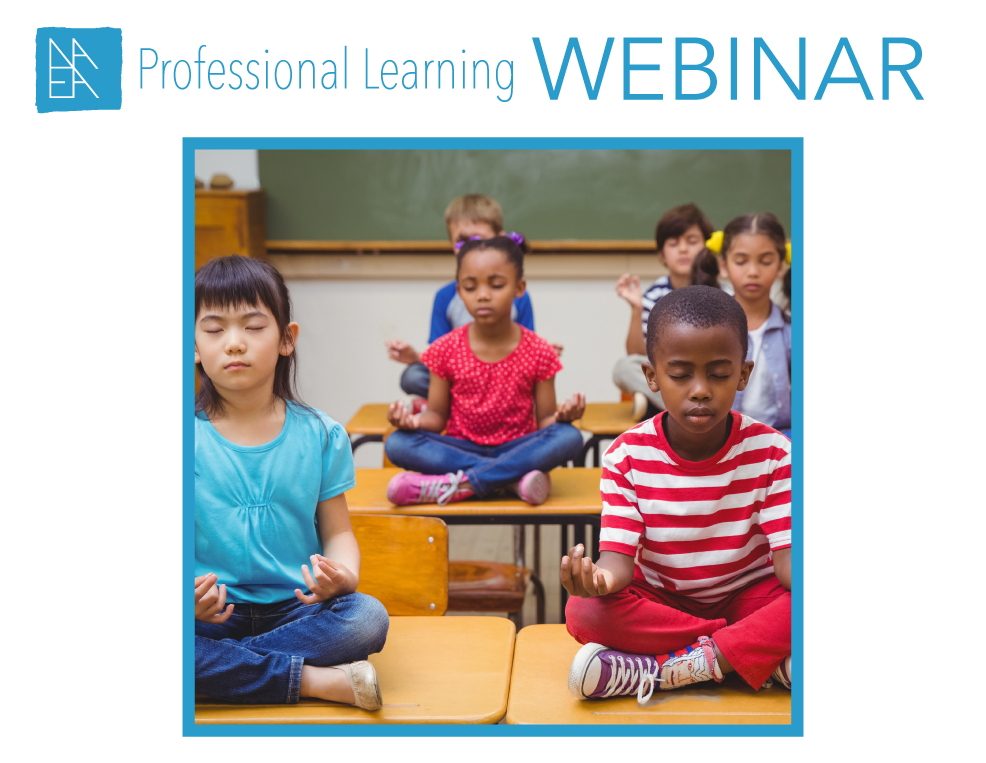
[January 5, 2022] Social–emotional learning provides a foundation for safe, positive learning and enhances students’ ability to succeed in school, careers, and life. Join Melissa Hronkin in this insightful webinar to learn mindful breathing, chair yoga, and other techniques that you can share with students and colleagues to help foster a culture of self-care in and out of the art room.
SEL Practices: Self-Care for Your Students and YOU
Wednesday, January 5, 2022
FREE for NAEA members; $49 for nonmembersSocial–emotional learning provides a foundation for safe, positive learning and enhances students’ ability to succeed in school, careers, and life. Join Melissa Hronkin in this insightful webinar to learn mindful breathing, chair yoga, and other techniques that you can share with students and colleagues to help foster a culture of self-care in and out of the art room.
Melissa Hronkin
Art Educator Houghton Elementary School, Yoga Instructor and Wellness Advocate
Houghton, MichiganMelissa Hronkin is an elementary art educator in the Upper Peninsula of Michigan. She earned her 200-hour yoga teacher and mindfulness training certification from Breathe for Change, which focuses on teacher well-being and methods of implementing these tools in the classroom. She has continued to study through Mindful Schools and has worked to create a culture of teacher self-care at her school with colleagues. Hronkin holds a BFA from the University of Alaska Anchorage, an MFA from Minneapolis College of Art and Design, and an MA in art education from The Ohio State University.
Upon completion of this NAEA webinar, you may earn 1 hour of professional development credit as designated by NAEA. Once the webinar is completed, you may view/print a Certification of Participation under the "Contents" tab. You may also print a transcript of all webinars attended under the "Dashboard" link in the right sidebar section of the page.
Clock hours provided upon completion of any NAEA professional learning program are granted for participation in an organized professional learning experience under responsible sponsorship, capable direction and qualified instruction, and can be used toward continuing education credit in most states. It is the responsibility of the participant to verify acceptance by professional governing authorities in their area.
-
Contains 1 Component(s)
When traveling on airplanes, adults are asked to secure their own oxygen masks before assisting children. This directive can also apply to art educators, who often find themselves challenged by the variety of challenges our learners encounter and bring with them to the classroom. Research indicates that educators should develop social–emotional competencies, be able to manage their stress and regulate their emotions, and strive to develop resilience. It is imperative that educators recognize their need for self-care, are equipped with an understanding of what self-care is, and know what they can do to develop this practice. Self-care for busy educators is not a selfish use of one’s time. In fact, by tending to our own self-care needs, we are better able to support our learners. This session, organized by the NAEA Research Commission’s Professional Learning Through Research Working Group, explores how self-care can contribute to our profes- sional success.
NAEA Need to Know Webcast: Fostering Resilience During Turbulent Times Through Educator Self-Care
January 20, 2020
Cost: FREEPresenter: Trina D. Harlow, Kansas State University; Lisa Kay, Temple University; Donalyn Heise, University of Texas at Austin
When traveling on airplanes, adults are asked to secure their own oxygen masks before assisting children. This directive can also apply to art educators, who often find themselves challenged by the variety of challenges our learners encounter and bring with them to the classroom. Research indicates that educators should develop social–emotional competencies, be able to manage their stress and regulate their emotions, and strive to develop resilience. It is imperative that educators recognize their need for self-care, are equipped with an understanding of what self-care is, and know what they can do to develop this practice. Self-care for busy educators is not a selfish use of one’s time. In fact, by tending to our own self-care needs, we are better able to support our learners. This session, organized by the NAEA Research Commission’s Professional Learning Through Research Working Group, explores how self-care can contribute to our profes-
sional success.Please note that participation in this webcast does not include NAEA professional development credit.
-
Contains 3 Component(s), Includes Credits
Educators, as helping professionals, often encounter the psychological and physiological effects of burnout and other secondary stressors. We invite you to invest in your personal and professional self-care at this webinar! Join us as we examine artmaking as an explorative source for resilience and self-care. In this webinar, we will use a multimodal approach and engage with prompts designed for reflecting on lived experiences and addressing a myriad of associated challenges. We will also delve into the Japanese concept of ikigai; uncover new ways of determining self-purpose; and discuss how to integrate mindfulness into daily routines—all cultivating calm awareness and intentionality.
Self-Care for Educators: Exploring Multimodal Artmaking for Resilience While Finding Purpose and Cultivating Well-Being
Wednesday, August 6, 2025
FREE for NAEA members; $49 for nonmembersEducators, as helping professionals, often encounter the psychological and physiological effects of burnout and other secondary stressors. We invite you to invest in your personal and professional self-care at this webinar! Join us as we examine artmaking as an explorative source for resilience and self-care. In this webinar, we will use a multimodal approach and engage with prompts designed for reflecting on lived experiences and addressing a myriad of associated challenges. We will also delve into the Japanese concept of ikigai; uncover new ways of determining self-purpose; and discuss how to integrate mindfulness into daily routines—all cultivating calm awareness and intentionality.
Stephen Newbold, Jr.
Digital Arts and Design Teacher
Stephen C. Newbold, Jr. is a Miami, Florida, native, artist, educator, and art leader based in Washington, DC. As a three-time alumni of the College of Fine Arts at Florida State University, he has earned two BA degrees, one in Art History and one in Political Science; a Master of Science degree in Art Education; and a PhD degree in Art Education. He desires to motivate and move people through art for social justice.
Lark Keeler
Artist and Educator, Saint Andrew’s School and NSU Art Museum
Lark Keeler is an artist and educator, connecting mind, body, and spirit over the past 24 years through experiences for learners of all ages and abilities. Lark was awarded the Florida Outstanding Art Educator of the Year in 2024, Elementary Art Educator of the Year in 2022, and Museum Educator of the Year in 2010. She has participated in the National Guild for Community Arts Education Leadership Institute and the NAEA School for Art Leaders. Lark has received certifications in mindfulness fundamentals and art therapy. She is currently chair of the Caucus on the Spiritual in Art Education, an NAEA Interest Group.
Upon completion of this NAEA webinar, you may earn 1 hour of professional development credit as designated by NAEA. Once the webinar is completed, you may view/print a Certification of Participation under the "Contents" tab. You may also print a transcript of all webinars attended under the "Dashboard" link in the right sidebar section of the page.
Clock hours provided upon completion of any NAEA professional learning program are granted for participation in an organized professional learning experience under responsible sponsorship, capable direction and qualified instruction, and can be used toward continuing education credit in most states. It is the responsibility of the participant to verify acceptance by professional governing authorities in their area.
-
Contains 1 Component(s)
Social Emotional Learning (SEL) has always been a critical component of learning and is often times an elegant fit in the art room and studio. In this conversation, our expert guests will discuss and share various SEL strategies to support learners, including trauma-informed education, as well as share ideas for teacher self-care at this uniquely taxing moment in time. Gain national, district, and classroom perspectives, solutions, and support.
NAEA Town Hall: Art Education and Social Emotional Learning: Taking Care of Our Learners and Ourselves
November 17, 2020
Cost: FREE!Presenters:
Karen Van Ausdal, Senior Director of Practice, Collaborative for Academic, Social, and Emotional Learning (CASEL), Chicago, IL
Lindsey D. Vance, Art Therapist, Fine Artist, Educator, and Consultant
Zerric Clinton, PhD, Art Educator, Dutchtown High School, Hampton, GA
Alexandra Burnside, Elementary Art Teacher, Carthage R-9 School District, Carthage, MO
---
Social Emotional Learning (SEL) has always been a critical component of learning and is often times an elegant fit in the art room and studio. In this conversation, our expert guests will discuss and share various SEL strategies to support learners, including trauma-informed education, as well as share ideas for teacher self-care at this uniquely taxing moment in time. Gain national, district, and classroom perspectives, solutions, and support.
Please note that participation in this Town Hall does not include NAEA professional development credit.
-
Contains 2 Component(s), Includes Credits
Is it possible to maintain a sense of balance between the creative roles of teacher and artist? Do you face an ongoing struggle with living what seems like two separate lives? Join in this webinar to explore some of the challenges many art teachers have in finding time, energy, and space to make their own work and discover successful strategies that can be employed to help maintain harmony and success within each of these worlds. Be ready to share your challenges and the approaches that have helped you with your personal art practice as we delve into how it is possible to establish a relationship between teaching and creating art by understanding how these two worlds can inspire and inform one another.
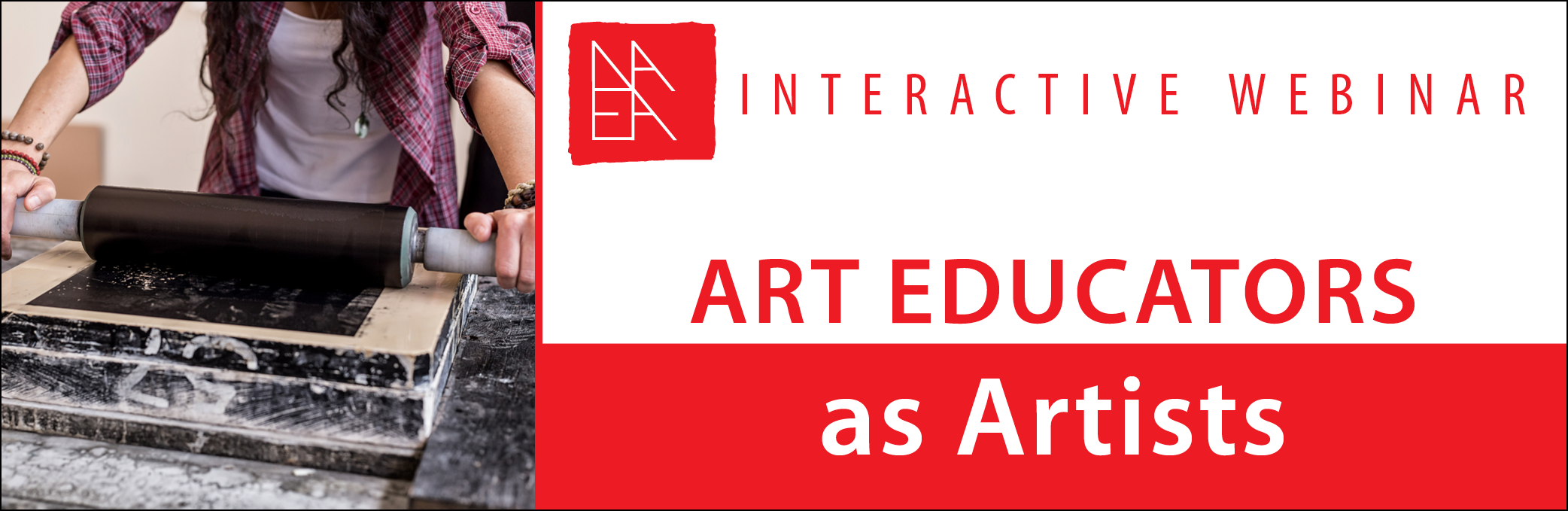
Art Educators as Artists
Wednesday, May 15, 2019 | 7-8 pm ET
FREE for NAEA Members; $49 for non-members
Is it possible to maintain a sense of balance between the creative roles of teacher and artist? Do you face an ongoing struggle with living what seems like two separate lives? Join in this webinar to explore some of the challenges many art teachers have in finding time, energy, and space to make their own work and discover successful strategies that can be employed to help maintain harmony and success within each of these worlds. Be ready to share your challenges and the approaches that have helped you with your personal art practice as we delve into how it is possible to establish a relationship between teaching and creating art by understanding how these two worlds can inspire and inform one another.James Rees, MFA
James Rees, while always maintaining his studio practice, has taught art for over 24 years at the college and high school levels. He has received awards from the National Art Education Association and the Marie Walsh Sharpe Art Foundation, as well as several residencies and fellowships throughout the United States. He is an Art 21 Educator and has worked as a mentor teacher for School of the Arts Institute of the Teacher Institute at the Museum of Contemporary Art Chicago. As an artist, he currently exhibits regionally and nationally.
Upon completion of this NAEA webinar, you may earn 1 hour of professional development credit as designated by NAEA. Once the webinar is completed, you may view/print a Certification of Participation under the "Contents" tab. You may also print a transcript of all webinars attended under the "Dashboard" link in the right sidebar section of the page.
Clock hours provided upon completion of any NAEA professional learning program are granted for participation in an organized professional learning experience under responsible sponsorship, capable direction and qualified instruction, and can be used toward continuing education credit in most states. It is the responsibility of the participant to verify acceptance by professional governing authorities in their area.
-
Contains 2 Component(s), Includes Credits
"Making it" as an artist or simply making our own art is something many of us want to do. And, in our field, we most likely want to do this while simultaneously having a meaningful career as an art educator. Did you know that you already hold the key to making this happen? It's your story! Learn innovative approaches to help you tell your story through your own work as an artist while embarking on some truly magical and collaborative projects with your students.
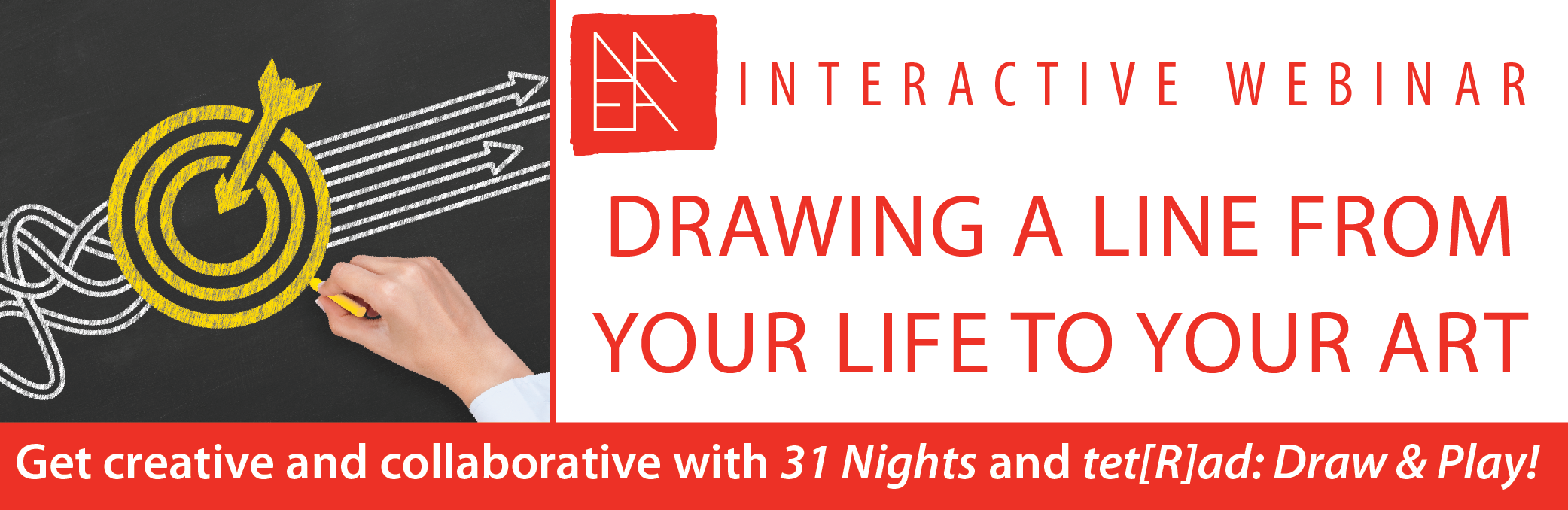
Drawing a Line From Your Life to Your Art: Get creative and collaborative with 31 Nights and tet[R]ad: Draw & Play!
Tuesday, June 6, 2017 | 7-8 pm ET
FREE for NAEA Members; $49 for non-members"Making it" as an artist or simply making our own art is something many of us want to do. And, in our field, we most likely want to do this while simultaneously having a meaningful career as an art educator. Did you know that you already hold the key to making this happen? It's your story!
Learn innovative approaches to help you tell your story through your own work as an artist while embarking on some truly magical and collaborative projects with your students.This webinar begins with an introduction to Michael Bell's worldwide movement called 31 Nights. This project will not only ignite passion in you and your students, but it can literally unlock the doors to your own artmaking process. Find your signature style and authentic voice in your artwork and your teaching.
Additionally, you'll explore another global project, tet[R]ad: Draw & Play. This international artmaking exchange project is envisioned and developed by longtime makers of creative mischief and innovative mayhem, David R. Modler and Samuel H. Peck. The ultimate goal of this ongoing project is to foster Personal Learning Networks through one-to-one visual journal/diary collaborations. tet[R]ad includes teachers, students, and artists, as well as others from the broader community. Participants openly and playfully share their drawings, writings, collages, opinions, and experiences as they make connections through collaboration and dialogue with artistic accomplices.
Become part of the cultivation of these creative communities while fostering your own creativity as an artist and educator—making global connections in the process! All are welcome!
Michael Bell
Artist and Educator
Michael Bell is an artist and educator who has played a vital role in pioneering the Visual Journaling movement by giving related TED talks, workshops, and keynotes across the country. He has been nationally recognized with honors that include the Los Angeles Good Shepherd Domestic Violence Shelter Community Service Award, the College Board's William U. Harris Award of Excellence, the National Art Honor Society Outstanding Sponsor Award, and the Washington Post Agnes Meyer Outstanding Teacher Award. Bell is also a seven-time NAEA National Rising Star award-winning Art Educator (2010–2016) and a three-time Scholastic Art National Medalist Educator (2014–2016). Bell is also a working artist, father, boxing enthusiast, and anti-bullying and autism activist.
Samuel H. Peck
Artist, Researcher, and Art Educator
Samuel H. Peck is an artist, researcher, and art educator originally from Providence, Rhode Island with over ten years of art teaching experience at the K-12 and university levels. He earned his Bachelor of Fine Arts from the University of Rhode Island and his Master of Studio Art in Printmaking and Drawing from the University of North Carolina at Greensboro. Peck is an internationally recognized expert in the field of visual journals, having spoken, presented, and exhibited at state, national, and international institutions and conferences. The subject matter of Peck’s visual journal, drawing, and printmaking practice occupies and explores the conceptual, expressive, and contextual concerns of his workshops, lectures, and presentations. Peck currently works at Southern High School in Harwood, Maryland as a resident artist, art educator, and researcher. Starting in fall 2017, he will begin work as a candidate for a Ph.D. in Art Education from the Department of Curriculum and Instruction at the University of Minnesota.
Upon completion of this NAEA webinar, you may earn 1 hour of professional development credit as designated by NAEA. Once the webinar is completed, you may view/print a Certification of Participation under the "Content" tab. You may also print a transcript of all webinars attended under the "Dashboard" link in the right sidebar section of the page.
Clock hours provided upon completion of any NAEA professional learning institute are granted for participation in an organized professional learning experience under responsible sponsorship, capable direction and qualified instruction, and can be used toward continuing education credit in most states. It is the responsibility of the participant to verify acceptance by professional governing authorities in their area.
-
Contains 1 Component(s)
Join us for an evening exploring how research impacts educational and artistic practice. Presenters from a range of diverse contexts will share inquiries that explore the multitude of ways educators, leaders, and artists embrace their role as researchers. Drawing from the themes of the 2022 Research Preconvention, presenters will discuss Research to Practice; Creative Practice as Research; Equity, Diversity, and Inclusion; and Building Research Networks in Art Education. The overall theme of this year’s Research Preconvention, What’s Your Why? Art Education Research as a Common Enterprise, stemmed from the Research Commission’s mission to cultivate a culture and community of inquiry making research meaningful and accessible to all. Find out more about how research lives differently in different places. Indeed, from schools, higher education institutions, museums, and community-based settings to online contexts, research in art education is a map with many destinations. Come connect, collaborate, and build research networks with people who share your questions.
NAEA Need to Know Webcast: Explorations of How Research Impacts Artistic and Educational Practice
February 24, 2022
Cost: FREEPresenters: Phaedra Michelle Byrd, Cala Coats, Nicole Cromartie, Alexa Kulinski, Patricia Phillips, Bailey H. Placzek, Shagun Singha
---
Join us for an evening exploring how research impacts educational and artistic practice. Presenters from a range of diverse contexts will share inquiries that explore the multitude of ways educators, leaders, and artists embrace their role as researchers. Drawing from the themes of the 2022 Research Preconvention, presenters will discuss Research to Practice; Creative Practice as Research; Equity, Diversity, and Inclusion; and Building Research Networks in Art Education. The overall theme of this year’s Research Preconvention, What’s Your Why? Art Education Research as a Common Enterprise, stemmed from the Research Commission’s mission to cultivate a culture and community of inquiry making research meaningful and accessible to all. Find out more about how research lives differently in different places. Indeed, from schools, higher education institutions, museums, and community-based settings to online contexts, research in art education is a map with many destinations. Come connect, collaborate, and build research networks with people who share your questions.
Please note that participation in this webcast does not include NAEA professional development credit.
-
Contains 1 Component(s)
Self-study is a methodology for self-inquiry used by practitioner–researchers across many disciplines. It is guided by questions focused on professional practice issues with the aims of self-awareness, professional growth, and professional goal setting. Within a self-study, a visual journal can document the processes of professional inquiry and serve as a rich source for arts-based data that can be interpreted for themes, insights, and new questions about professional practice. Drawing upon the text, Becoming a Visually Reflective Practitioner: An Integrated Self-Study Model for Professional Practice (Sheri R. Klein and Kathy Marzilli Miraglia, 2021, Intellect), the presenter–researcher will discuss arts-based self-study as a useful research methodology for art educators to explore issues related to professional practice. The purposes of and considerations for a visual journal will be outlined using examples from the presenter/researcher’s self-study journal.
NAEA Need to Know Webcast: Visual Journaling in a Self-Study: Exploring Intersectional Issues of Professional Practice
January 27, 2022
Cost: FREEPresenters:
Sheri R. Klein
Interdisciplinary Artist, Educator, and Scholar
Founder & Creative Director, Braided Streams LLC---
Self-study is a methodology for self-inquiry used by practitioner–researchers across many disciplines. It is guided by questions focused on professional practice issues with the aims of self-awareness, professional growth, and professional goal setting. Within a self-study, a visual journal can document the processes of professional inquiry and serve as a rich source for arts-based data that can be interpreted for themes, insights, and new questions about professional practice. Drawing upon the text, Becoming a Visually Reflective Practitioner: An Integrated Self-Study Model for Professional Practice (Sheri R. Klein and Kathy Marzilli Miraglia, 2021, Intellect), the presenter–researcher will discuss arts-based self-study as a useful research methodology for art educators to explore issues related to professional practice. The purposes of and considerations for a visual journal will be outlined using examples from the presenter/researcher’s self-study journal.
Participants will learn:
• ways to explore areas of professional practice using prompts and questions to guide inquiry
• various methods and processes for the interpretation of written and visual journal data, and
• how to use outcomes of self-study to further guide professional practice.To conclude, the presenter–researcher will share some of the “lessons learned” and the benefits and challenges of visual journaling in a self-study. This webinar is designed for visual arts practitioners (art teachers, graduate students, university faculty, independent artists, activists, arts administrators, and/or museum educators) at any level of practice who are interested in reflective practice, professional development, self-study as a research methodology, and/or using arts-based methods within their research.
Please note that participation in this webcast does not include NAEA professional development credit.
Click on a link below to open the resource.
NAEA Platform and Position Statements:
- Position Statement on Achieving an Equitable, Diverse, and Inclusive Visual Arts Education Profession
- NAEA Position Statement on Supporting, Sustaining, and Retaining Art Education Programs in Colleges and Universities
NAEA Books:
- Uniting Body, Mind, and Spirit Through Art Education. By Jane K Bates
- The Heart of Art Education: Holistic Approaches to Creativity, Integration, and Transformation. By Laurel H. Campbell and Seymour Simmons III
- Art Education and Creative Aging Older Adults as Learners, Makers, and Teachers of Art (No. 352). Edited By Melanie Davenport, Linda Hoeptner Poling, Rébecca Bourgault, Marjorie Cohee Manifold
NAEA Interest Groups:
Click on a title below to download the resource.
Art Education Journal:
- Campbell, Laurel H., and Jane Dalton. “Researching Contemporary Handwork: Stitching as Renewal, Remembrance, and Revolution.” Art Education (Reston), vol. 72, no. 4, 2019, pp. 29–35.
- Baer, S.A., Smith, K.A., Danker, S. D. (2024) Autobiographical Lectures of Leaders in Art Education, 2001–2021 (No. 353).
- Bastos, F. (2009). Resonant Teachers’ Voices. Art Education, 62(4), 4–5.
- Broome, J. & Sandell, R. (2023). Real Lives Now: Narratives of Art Educators and 21st Century Learning.
- Reed, K. (1957). The Needs of the Teacher. Art Education, 10(5), 1–2.
Studies in Art Education Articles:
- Lawton, P. H. (2025). Critical [Self] Portraiture: Authoring Our Own Stories. Studies in Art Education, 66(2), 198–213.
- Kwon, H. (2022). Pedagogies of Care and Justice: African American High School Art Teachers During the Civil Rights Era in the Segregated South. Studies in Art Education, 63(3), 256–274.
- Dalton, Jane E. “A Review of Art as Contemplative Practice: Expressive Pathways to the Self.” Studies in Art Education, vol. 60, no. 2, Routledge, 2019, pp. 144–47.